Items, Variants, & SKUs Explained

An Item is a generic definition of objects that are typically ordered, ex: "Long Sleeve Quarter Zip Jacket", "Beach Towels", or "Drinkware". Typically an item definition with a distributor corresponds to an item in a vendor's catalog. An item is also likely to have a "code" within the distributor's system. Ex: "ABC123". A specific "Variant" defines an item with clear attributes. Ex: "Blue, Medium, Women's Long Sleeves Quarter Zip Jacket". A SKU represents the code within the distributor's system for a specific variant. Ex: ABC123_1A3.
Item
Items are goods or services that are available to order from a product or service catalog. Catalog administrators can define catalog items, with details such as formatted descriptions, photos, prices and other "attributes". In Aturian, an Item may or may not correspond to a physical entity on a shelf. Ex: "A long Sleeve Quarter Zip Jacket" is an example of a generic item, however it does not specify its color, size or any other possible attributes that you'd need to define that item completely.
In the Aturian system, an item is identified by an item number. Items typically have a name as well as a description.
Example Items
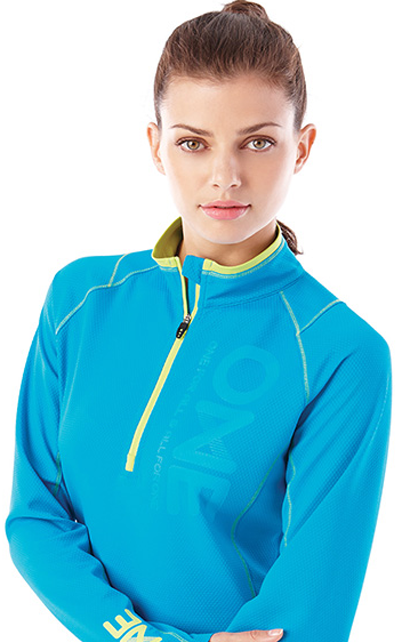 | Quarter Zip Long Sleeves Jacket
|
 | Backpack
|
Variants
A variant is a specific instance of an item that can be identified by clearly defining the attributes of that item. Example: A Quarter Zip Long Sleeve Jacket can have many variants with a variety of colors, sizes, styles and/or materials. A variant for a Quarter Zip Long Sleeve Jacket can be a "Blue-Medium-Womens, Quarter Zip Long Sleeve Jacket". Typically a variant can be identified as a specific product or service.
A variant "extends" the definition of an item by providing specifics about the item. Typically an item in a catalog refers to a generic definition where as the variants illustrate the possibilities that are available for a user to order or to choose from.
Color: Column 1 Variants | Size: Column 2 Variants | Logo: Column 3 Variants |
1 = Red | 1 = Small | 1 = Logo A |
2 = Blue | 2 = Medium | 2 = Logo B |
3 = Green | 3 = Large | 3 = Logo C |
Example Variants
 | Quarter Zip Long Sleeves Jacket (Blue / Medium / Women's)
|
| Backpack (Navy / Gore Tek)
|
SKU
A SKU (Stock Keeping Unit) is an identifier for a variant. An inventory item is identified by a SKU. A SKU is a "Variant Number" and completely identifies a product or a service. A SKU attributes could include, but are not limited to, color, material, size, packaging, logo, country of origin or any other attribute or a combination of attributes that are required to completely define a variant. When a business takes its inventory, it counts the quantity it has of each SKU.
SKU codes are neither regulated nor standardized. When a company receives items from a vendor, it has a choice of maintaining the vendor's SKU or creating its own. Aturian system provides the user to assign a distributor SKU to a variant.
In the Aturian platform, an item can have a maximum of 8 "options" to define variants (ex: color, size, gender, material, country of origin or any other user defined options). For each option, the user can define upto 36 different values. Each value is defined by a number from 0 - 9 and A-Z. Example: Color can be one of the eight options used to define a variant. There can be a maximum of 36 different colors for that item. This structure enables the Aturian system to have more than 2 trillion (2,821,109,907,456) possible variants for each item
Example SKUs
| SKU: NKM123_1211
|
| SKU: TN1489_15
|